10 Years of Eisley

eisley

A decade ago, when I was a teenager, the music industry hadn’t been completely pulverized by the Internet, and I bought CDs, with jewel cases and thin paper inserts. I began with rather angsty staples – Linkin Park, Staind – and later moved to poppier groups like Blink-182 and Smash Mouth. I listened to Z100 and then the now buried 92.3 K-Rock and was fed a steady diet of pop and punk. I totally recorded songs that I liked on to a cassette so I could listen on demand, although the singles would inevitably come on again in a few hours, so it was never a huge wait.

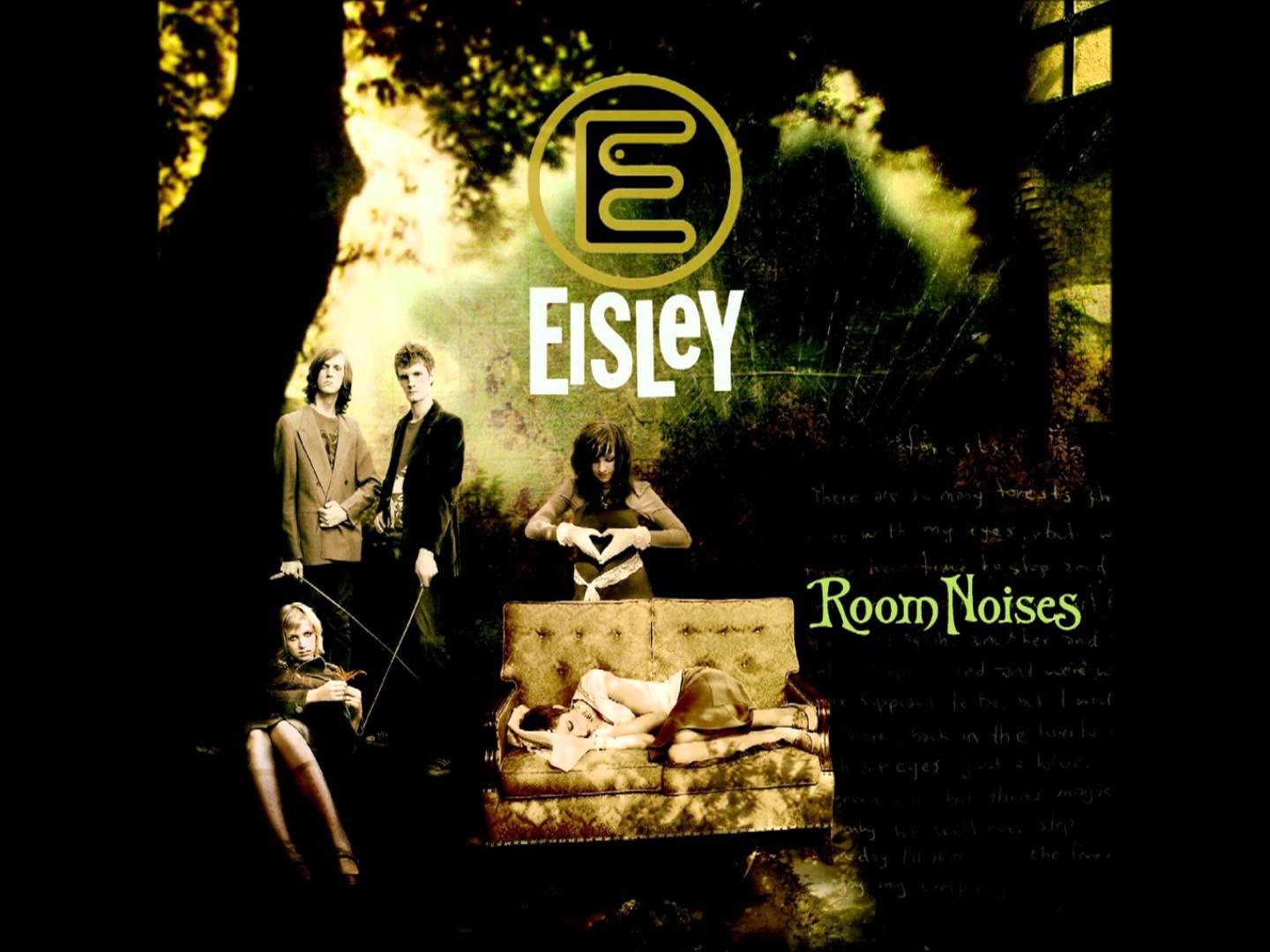
In the early aughts, I ventured online, hungry to fill the newly released iPod with new tunes. On the unlikely source of Yahoo! Music, I discovered Eisley. This was different. There were familiar themes of love and loss, but also an otherworldly beauty, courtesy of the Dupree sisters’ soaring harmonies – yet they also tore it up on guitar. Their first single, “Telescope Eyes,” and its haunting refrains encapsulated vulnerability and yearning in a way that no emo band rivals. I was enchanted, and ten years later to the day the album came out, there’s an aura and timelessness that permeates each song. They ignited my love of music and also writing – Boyd Dupree, father of most of the band, keeping an intimate log of the band’s tours, hopes and fears. (That journal is criminally offline now, but here’s some remnants). Eisley is quintessential dream pop for me, creating a world that can’t possibly exist, but would perhaps resemble the wooded surrounds of the band’s hometown of Tyler, Tex.

In the real world, things are not so ideal, despite a strong start. Eisley first signed to a major, Warner Brothers, and their first tour was, dizzyingly, opening up for Coldplay in arenas. They later toured with pop punk bands whose testosterone wailing made for a jarring union. They weren’t obscure enough for Pitchfork, yet they also had no mainstream radio breaks. Eventually, they left Warner for the indie Equal Vision, which meant creative freedom but financial peril – they failed to raise $100,000 on Kickstarter for a subsequent tour and had to borrow to make it happen.

But music is not just a career for the band, but a fundamental purpose. They’re still around, with a fifth album expected this year. Cheers to the next decade being even better.

On Leaving New York

nyc

I was a child of the suburbs.

Most of my high school life narrowed to a mile-long stretch of Boston Post Road, trudging to class. Our nocturnal highlight was Taco Bell, which was open until 1 a.m.

The city was a faint impression of stately Art Deco landmarks and a maze of subways. My deepest excursions were to Flushing, Queens, where we got groceries at a Korean supermarket every month.

When I applied to colleges, I confined myself to the Northeast. For some reason I didn’t have any impulse to go further. The choices were ultimately between University of Rochester and NYU. I figured that I should get to know a city that I had no experience of, despite living a 30 minute train ride away from Grand Central.

Washington Square Park is a bucolic place. You can forget that you’re in the most dense American city when you lose sight of the skyscrapers peeking above the trees. My dorm was on 10th Street and Broadway, which now seems like a surreal, impressive address. Cars poured by my window, but the side streets were calm.

I was pre-med, mostly because my parents – a pathologist and a radiation oncologist – encouraged me to be. My first class was Chemistry, in a lecture hall so flooded with hundreds of students that attendance was taken with electronic clickers. People who skipped out would have their friends click them in.

But my real passion was music. I remember walking to Mercury Lounge in August, exhaling in the air conditioned box office, and laying down $100 for five or six tickets concerts for the fall semester. I started writing, on a whim, for the school paper. My editor had to explain to me what a “lede” and “nut graf” were, but I started figuring things out.

The first time I went to Brooklyn was to see a band called Headlights that I had interviewed. It was 21+ and I was 18, but the promoter managed to slip me through the bouncer. North 6th Street felt intimidating at midnight, in the midst of winter with mostly deserted streets.

That seems laughable eight years later. Williamsburg is getting Apple, Whole Foods and J. Crew soon. Glassy condos dominate the waterfront. Galapagos became Public Assembly and then turned into a bar. The original Galapagos is moving to Detroit. Nothing lasts forever, but in New York, it seems that the special, precious things are often the first to go.

I’ve changed, too. Medicine is a distant memory. I write, mostly about the city and its physical form – the money that flows in properties and the commerce that surrounds them. And my world has narrowed again, it seems, to eight blocks in Brooklyn and perhaps a few dozen in Manhattan. When did such a big city begin to feel so small, so familiar?

I still love New York. Its skyline, its diversity, its relentless pace are a beautiful thing. But eight years is a long time, and what was so inspiring has become somewhat repetitive. The feeling of awe has given way to a feeling of wondering what else is out there.

So I’m moving to San Francisco next month. There are familiar themes there: Grappling with gentrification, celebrating diversity, but also, I hope, a sense of wonder and surprise that has diminished on this side of the country. I don’t think I’ll miss winter. But every bone-freezing snowstorm, every summer without air conditioning, every sweeping view from a rooftop, and especially every friend is a gift that I won’t forget.

Reporting, October 2012

Here are the stories I wrote this month:

Q&A: Aeroplane,” Interview, Oct. 4

Q&A: The Raveonettes,” Interview, Oct. 5

A Hotel Building Boom in New York,” The New York Times, Oct. 9

Q&A: Matmos,” Interview, Oct. 12

Roosevelt memorial is also a tribute to the late Louis Kahn, enigmatic architect,” Capital New York, Oct. 18″

A Luxury Brokerage With Familiar Name,” The Wall Street Journal, Oct. 28

Total Words: 7,172

Total Sources: 14

2011: The Year of Esports

International Business Times, January 1, 2012

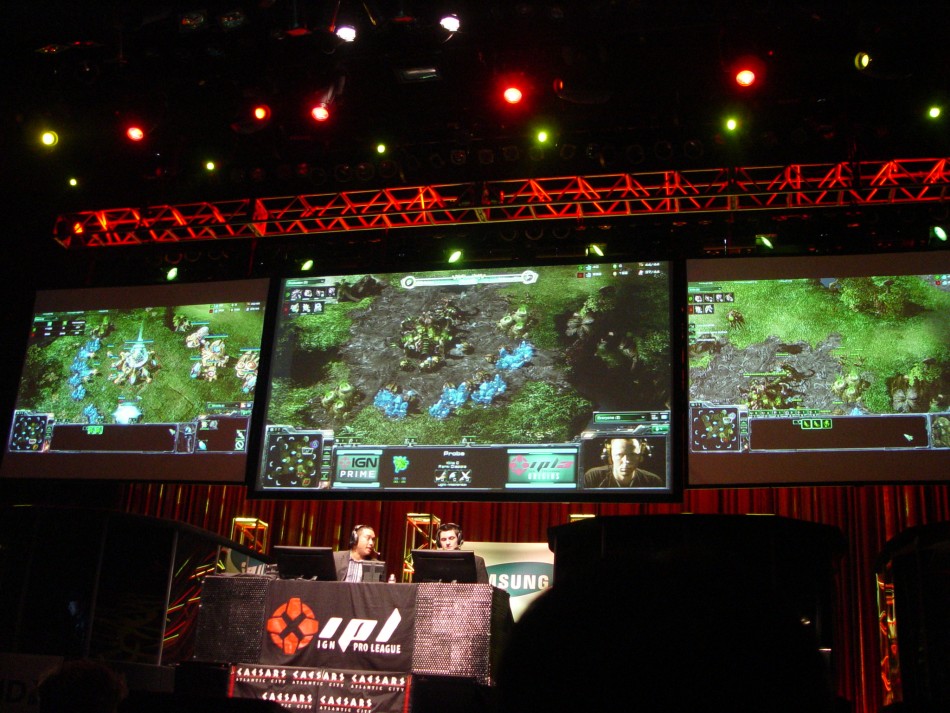
It was an October weekend in Atlantic City, N.J., and the crowd was roaring.

The two competitors in front of it gazed intently at their screens, knowing one misstep would lead to defeat. With time running out, Jonathan “KiWiKaKi” Garneau, took a final gamble, hoping his opponent would bite.

Ilyes “Stephano” Satouri obliged, sending his army crashing into Garneau’s, a wave of alien flesh. But with a few keystrokes, Garneau sucked his opponent’s forces into two Vortexes, sending his Archons — psionic warriors with powerful splash attack capability — in after them.

When Satouri’s soldiers re-emerged, they disintegrated under the onslaught, and Garneau would go on to take the match.

The crowd’s roar swelled, filling the theater, and its members rose to deliver a standing ovation.

This is esports (electronic sports), a booming industry in which professional video gamers compete for thousands of dollars in prize money. Garneau and Satouri, who were competing during the IGN Pro League (IPL) Season 3, are among hundreds of pros who play Starcraft II, a science-fiction real-time strategy game by Blizzard Entertainment, released in 2010.

Blizzard has sold more than 4.5 million copies of Starcraft II worldwide, but the game’s impact goes beyond a leisurely diversion. Over the past year and a half, hundreds of players have made their livelihoods — and stars have been born because of it. Millions in tournament prize money has been awarded, with top earner Jeong “IMMvp” Jong Hyeon taking home about $250,000.

Major League Gaming (MLG), an American tournament organizer, had 3.5 million unique video stream viewers over the course of its six events during the past year. Viewership surpassed those of some cable-television channels, heavily slanted toward males 18 to 24, advertisers’ prime target.

Esports may have also circumvented the digital age’s content dilemma. The file sharing and video streaming that has devastated the music industry and deflated television and film revenue has enabled esports to grow. Most tournament streams are free for viewers — they are supported by a mix of advertising, sponsorships, and premium subscriptions.

With the proliferation of cheap and fast video streaming, passionate fans, and eager sponsors, esports is poised to become a global standard for entertainment, although challenges remain.

In the beginning of 2011, David Ting put his job on the line. Ting, a veteran engineer with stints at IBM, Altavista, and Yahoo, pitched a new esports division at IGN, the gaming Web site owned by the News Corp.

Already an avid Starcraft player, Ting was intrigued after watching videos on YouTube and examining the history of esports. He saw that previous ventures had failed, but saw huge potential, with compelling game play, relatively low overhead costs, and, perhaps most importantly, passionate individuals in the industry.

“With all those elements together, I felt that there was definitely a business plan,” he said.

His boss at IGN agreed. Ting began assembling a small team to start the first IPL tournament, a small online tournament with a $5,000 prize pool. His role would eventually transition completely, from IGN’s head of engineering to its esports manager.

Ting’s goal wasn’t merely to deliver a strong brand, but also to allow people who are passionate about video games make a real living. He sought to hire people from the community, including commentators Alex “HDStarcraft” Do, who helped popularize Starcraft II with a YouTube channel with more than 156 million views, and Taylor “Painuser” Parsons, a pro gamer who transitioned to commentating.

Ting also realized that despite the convenience of watching online matches from a computer, having a live element was invaluable, displaying the passion of the crowd and the blistering speed of the players. In October, IGN partnered with the Caesars Atlantic City resort to present its first live event, IPL Season 3. It flew in 32 of the best players in the world, and enlisted Utah Jazz basketball star Gordon Hayward to compete in the open qualifier and promote the tournament. Even the pharmaceutical giant Johnson & Johnson became a late sponsor, promoting its Visine eye drops to tired gamers.

IPL has also been highly sensitive to community feedback. For its first season, IPL focused on North American players, but found the global audience didn’t find that angle very compelling. So for IPL 3, with a $120,000 prize pool, they invited a number of Korean players, who would dominate the bracket.

There was a temporary setback, when a truck slammed into a transformer and brought down the Comcast Internet network for a few hours, leaving competitors unable to play. But the tournament recovered and was a success, with Satouri, an 18-year-old Frenchman, taking the $30,000 grand prize after surviving Garneau’s antics and demolishing some formidable South Korean players.

For now, esports is only a blip on IGN’s balance sheet, and any profits from the tournaments have been modest. But the focus is on long-term sustainability. In 2012, Ting plans to have four live events, and IGN streams content virtually every night.

“We’re in for the long haul. We believe in investing into the ecosystem,” said Ting. “Let’s grow this … before we carve anything out of it.”

Video games have always been competitive. The early arcade boxes had pixelated charts of high scores, and many a kid competed to be the best player in his neighborhood.

The rise of the Internet and the release of canonical first-person shooters like Doom, Quake, and Counterstrike began to bring together players from around the world. In 1997, the Cyberathelete Professional League, one of the first esports organizations, was launched.

While esports has remained on the periphery, video games have surged in four decades to become one of the largest entertainment industries in the world. According to PricewaterhouseCoopers, the global industry was worth about $56 billion in 2010 — larger than either the music or magazine industries, and nearly two-thirds the size of the film industry. The average age of the American gamer is 37, and 42 percent of them are female, according to the Entertainment Software Association’s 2011 report.

While Starcraft II fans — and particularly the game’s players — are mostly male, there are a handful of prominent high-level female players, as well as commentators and personalities. But the grueling path to become a professional gamer is a high barrier for anyone.

Starcraft is a game of economy. Each player chooses one of three distinct races to play — the insectlike Zerg, technologic Protoss, or the gritty, human Terran — and extract two resources, minerals and the fictional vespene gas, from the battlefield to construct buildings, military units, and research technologies. Managing efficient, robust production, known as “macro,” is one of the most critical skills for players.

Each battlefield is shrouded in a “fog of war” that obscures the enemy, and players must use their units to get a glimpse of what their opponents are doing. The incomplete information compounds the game’s complexity for players, but adds more excitement for fans.

Professional gamers have a certain reputation — pale, scrawny, bespectacled — but their talents are mesmerizing. The typical pro carries out more than 200 actions per minute (APM), fingers flying around the keyboard for over an hour during a typical three-game series. Coupled with the strategic depth of Starcraft, watching a game is akin to witnessing grandmaster-level chess as controlled by two pianists churning at top speed. A study at Simon Fraser University is even examining Starcraft replays to better understand the brain’s ability to multitask.

What makes professional gamers so dominant at Starcraft isn’t just strategic superiority, but mechanics. To continue the chess analogy, a Starcraft pro not only moves his pieces brilliantly, but also plays more pieces than the average player on the board: The game is dependent on unit production, as well as tactics.

Talent is often said to be secondary to dedication, at least until reaching the highest level of play, with the top pro gamers practicing more than eight hours a day. And the very best go to South Korea.

Seoul has been the mecca for esports for a decade. A confluence of factors planted the seeds: A recession led residents to seek cheap entertainment, animosity centered on Japan limited console games, and cheap broadband Internet access led to the rise of “PC bangs,” ubiquitous gaming cafes where many young people hang out.

With Seoul’s urban density limiting the amount of physical sporting fields, players took to the digital realm. Today, two cable-television channels, Ongamenet and MBC Game, broadcast video-game content full-time.

The original Starcraft: Brood War rose to become the premier competitive game, and continues to be a mainstay in the country, attracting significant sponsorship. But with such an entrenched predecessor, Starcraft II has actually seen more growth outside South Korea than inside it, although Seoul does host GOMTV’s Global Starcraft II League (GSL), regarded as the most fiercely competitive tournament in the world, with a monthly prize pool over $100,000. The tournament’s sponsors include blue-chip companies, such as the Intel Corp. and Pepsico Inc.

The Brood War model of team houses — close-quartered apartments where players train in a row of monitors and share strategies — has carried over to Starcraft II, and the very best players remain the Koreans. Some of the top so-called “foreigners,” or non-Korean players, often train in partnership with the Korean teams.

The pilgrimage has paid off for some. In 2011, Chris “HuK” Loranger, an American-Canadian pro, signed a contract that will pay him a reported six-figure salary a year with Los Angeles-based Evil Geniuses, one of the largest esports teams. His skill developed greatly over the course of a year of training in South Korea as a member of Team Liquid, which partnered with the Korean team oGs in one of the first such unions.

“Korea is also a difficult setting to live in,” said Victor “Nazgul” Goossens, founder of Team Liquid, who traveled to Korea in 2002 to compete in Brood War for six months, before returning to school. “The houses are packed, you don’t have privacy, and you don’t speak the language. However, if you want to be the very best in the world like Mvp, there really is no place to achieve that besides Korea.”

Although the Korean Starcraft II teams are loaded with talent, they often lack the deep pockets of the major foreign teams, who have the backing of sponsors that generally pay for the bulk of the team’s operations. This economic reality has led to global partnerships, which have been largely absent from the Brood War industry, where teams like CJ Entus and SK Telecom T1 have little use for foreigners, because of their own sponsorships and the singularity of competition centered in South Korea.

The question remains if and when the Brood War pros will switch over to Starcraft II. Many expect them to dominate, since Brood War is a far more demanding game mechanically, but no major migration has yet occurred. However, four Brood War stars went to Blizzcon, Blizzard Entertainment’s annual celebration in October, to witness the growth of esports in the West.

“Apparently, they were completely blown away by the size of the crowds,” said Marcus “DJWheat” Graham, an esports veteran who hosts a number of talk shows and is a regular tournament commentator. “It took them seven years to grow that in Brood War. They weren’t bringing in 100,000 people until year seven.”

Because the market within South Korea is more limited for Starcraft II, some teams are so cash-strapped that they are sustained by the winnings of their players, said Alan “Raelcun” Brusky, a member of FXOpen, a team sponsored by the Australian arm of the eponymous forex trading company. This creates additional pressure for the players, who feel that their success in tournaments is crucial for the team’s survival, said Brusky.

As a result, some South Korean teams have merged or partnered with foreign entities. FXO acquired the Korean team fOu in July for an undisclosed amount, in what appeared to be a combination of fOu’s strong Korean roster and FXO’s solid financials. Brusky, who was formerly part of tournament organizer iCCup TV, which dissolved and was reformed as ESVision, said he sees more esports organizations disbanding over the next year, because of the lack of financing.

Even South Korean teams that appear to have strong financials have seen value in entering into foreign partnerships. SlayerS, led by the Brood War legend Lim “BoxeR” Yo-Hwan, is sharing a team house with members of Evil Geniuses. The cost of plane tickets remains a major obstacle for sending players to tournament outside their own region. As a result, Complexity Gaming, a large American team that counts consumer-electronics company Creative as a sponsor, and Korean team MVP have partnered to send two Korean players, Park “DongRaeGu” Soo Ho and Jung “Genius” Min Soo, to tournaments outside Korea, as have SK Gaming and oGs.

There also appears to be some consolidation in the foreign scene, with major teams scooping up smaller entities.

During the early days of Starcraft II, Edward Chang reached out to Andrew “Drewbie” Moysey and Paulo “CatZ” Vizcarra, leaders of the team ROOT Gaming. He began managing the team, doing press and sponsorship work, as it eventually grew to have a staff of about seven. In July, ROOT and most of its roster was acquired by the larger Complexity Gaming, where Chang remains on staff.

Although the industry has seen growth in the past year, securing sponsors remains difficult, especially for smaller teams, said Chang.

“I think it’s just as challenging as ever. Looking at the economy, esports is still very young,” he said. “I think a lot more sponsors need to jump in before we have more smaller [teams].”

For those who don’t make it as pro gamers, commentating can provide a promising alternative for those who seek a career in esports. Commentators, or “shoutcasters,” form a crucial bridge between players and the audience during tournaments, and the very best are said to earn more than players.

Jake “orb” Sklarew was one of the top players during the beta period of testing, even taking a game off Greg “IdrA” Fields, who is often regarded as the best non-Korean player. But his passion for the game took a toll on his college studies, and he decided to leave school to pursue esports full-time.

After working at a restaurant to save money, Sklarew began training with the intent of returning to the pro scene. Unfortunately, Sklarew is colorblind, which doesn’t greatly handicap his play, save in one aspect: Terran nuclear missiles, which land after a brief delay on a spot marked by a red dot. Sklarew finds them almost impossible to see, particularly on green backgrounds, and was knocked out of six tournaments in a row when he tried to return to pro gaming.

Resigned to his weakness, Sklarew switched to focus on commentating, getting a gig with ESVision’s Korean Weekly, an online tournament that hosted some of the lesser-known Korean players. It was a boon being associated with such players, as it accelerated his game knowledge and brought him to the forefront of trends in the metagame, he said.

Perhaps most importantly for Sklarew, ‘casting removes the anger from the game that comes from losses. He said the feedback has been overwhelmingly positive since he began commentating, in contrast to the more mixed response when he played. In 2011, Sklarew became a regular ‘caster at the North American Star League, and appeared at the tournament’s finals, his first live event, in December.

“It was unbelievably refreshing,” he said.

The foundation to good commentary is strong game knowledge, said Sklarew, and a background as a strong player is a great asset. But there are other factors that are more intrinsic, including the pitch of one’s voice, which can immediately handicap a prospective ‘caster. In contrast, humor and personality can be enhanced — Sklarew credits some acting classes for improving his enthusiasm — although the most charismatic ‘casters, such as Sean “Day[9]” Plott, seem to pull it off naturally.

Although the attention in esports often focuses on the personalities and players who compete, the advancement of technology has been a crucial element in its growth.

In September, one of the driving forces behind video streaming, Justin Kan, met fans at a bar in New York’s East Village.

Kan is the namesake and one of the founders of Justin.tv, which began as a “lifecasting” platform that chronicled every moment of his daily life, with venture capital from Y Combinator. In 2007, the site turned into a streaming video provider, and Kan and co-founder Emmett Shear began noticing that a portion of their San Francisco office obsessively watched other people play video games.

They realized that they could provide a better platform for streamers, and in June, Justin.tv launched Twitch.tv, a spin-off site that focused on video-game broadcasts, and began serving as the main platform for most of the major Starcraft II tournaments. By year’s end, Twitch.tv has reached 12 million unique monthly visitors and has partnered with more than 1,000 streamers, with 10 percent monthly growth. Twitch.tv now accounts for a substantial amount of Justin.tv’s profits.

Although the site may be most known for its premier tournaments, Twitch.tv has also democratized the process, allowing anyone with a computer to sign up and broadcast. Twitch.tv splits half of the ad revenue with stream partners who hit modest numbers (500 concurrent viewers, 25,000 total views), with ad rates that range from $2.50 to $10 per thousand viewers.

Steven “Destiny” Bonnell II, for example, lacks major tournament results, but his mischievous antics and strong viewer interaction allow him to command about 5,000 viewers each night. Bonnell supports himself and a newborn child exclusively by streaming. He and  Shawn “Sheth” Simon  also helped raise $32,000 for Doctors Without Borders through streaming.

Kan has competitors, including own3D.tv and ustream (Bonnell recently switched to own3D), but he has eyes on bigger companies: YouTube and, eventually, broadcast television. He believes, in time, esports could overtake cable television in its reach, and Twitch.tv has invested heavily in data centers around the world.

Twitch.tv also recently recruited Graham, the esports veteran and commentator, and James “2GD” Harding to bolster its esports division. In addition to Starcraft, it broadcasts fighting games and shooters, as well as the multiplayer online battle arena (MOBA) genre, dominated by Riot Games’ League of Legends, a free-to-play online game that has over 11 million active players — more than World of Warcraft.

Graham said that one flaw of Starcraft fans may be their dismissal of other games. For esports to truly grow, he said, success across multiple platforms is beneficial. “If one game fails, it’s a little bit of everything failing,” he said. Graham also plans to bring back Epileptic Gaming, a general video-game talk show, in 2012.


Around midnight on Dec. 6, #esports trended globally on Twitter. It was a brief spark, disappearing under the typical sports-and-celebrity topics in a few minutes.

The effort — a sort of experiment to measure the industry’s voice — was organized by State of the Game, a popular podcast and talk show, and amplified by the scene’s social hubs. It epitomized the fervor of esports fans to promote their passion.

A major meeting ground for Starcraft II is on Reddit, the social news site owned by Advance Publications, where users submit text or links that are voted up or down by the community. The r/starcraft subreddit has over 75,000 subscribers, and is regularly flooded with news, multimedia, and, inevitably, memes.

Reddit user Firi created the subreddit in 2008, inspired after watching Korean matches casted by Nick “Tasteless” Plott, one of the first English commentators in the country.

Along with the usual content, r/starcraft has been the scene for remarkable altruism. A proposed documentary on Dan “Artosis” Stemkoski and Plott raised $42,155 from 881 supporters on Kickstarter. Reddit also collectively raised $3,615 to send Lee “MarineKingPrime” Jung Hoon from South Korea to MLG Orlando. Lee reciprocated the generosity by wearing a reddit patch and flashing the site’s “upvote symbol” on stage.

“I think that it’s fantastic. Using something that many might consider a waste of time — a video game — to bring positive, real, and quantifiable change to the world is one of the best uses of a video game that I can imagine,” said Firi.

But there is a dark side.

With the fan adulation come expectations, both for players and tournaments. Viewers are quick to criticize poor video quality or what they regard as subpar production or commentary. A November tournament in the Philippines was a particularly messy affair, with accusations of fraud and missing funds.

But beyond constructive criticism, the focus on personalities and celebrity has made some users characterize the subreddit as “the TMZ of Starcraft,” with its share of “witch hunts.”

The most personal vitriol has perhaps been unleashed towards Geoff “iNcontrol” Robinson, a prominent player who frequently appears on streams. But after placing fourth at an MLG event early in the year and being seeded highly for the rest of the reason, Robinson was winless in the next three events, falling to a number of top-tier Korean players.

On reddit, Robinson was torn apart by a vocal minority of users, who criticized everything from his worthiness as a player to his appearance. And while it is common to have athletes in other sports derided for their play, the ferocity and personal nature of the attacks was striking, although some users did defend him.

“It’s difficult to categorize ‘backlash’ and ‘hate’ into an easy-to-discuss package because their motivations are so diverse. I mean, sometimes backlash and hate [discontent] are justifiable,” said Firi. “Regarding the unjustifiable variety, it’s a combination of human nature and the distance created by the Internet. It’s an unavoidable part of almost every online community.”

By the end of 2012, Firi expects the subreddit to almost double its number of subscribers to more than 130,000. He said that the greatest challenge is regulating submissions, but recently implemented new rules to cut down on content that is only tangentially related to the game.

The other major social hub is TeamLiquid.net (TL), which has grown to have about 200,000 daily unique visitors, with 2 million to 3 million monthly uniques, according to Goossens, founder of the team and site. It has five full-time staffers in its main office in New York, along with five part-time staff and 200 volunteers around the world.

The site is the home of the Starcraft II team of the same name. It also meticulously chronicles tournament results and news in articles and in its expansive discussion forums. It aspires to be the ESPN of the industry, said Goossens.

“Nobody else has been able to do the things we do, and as a result people like to come to TL. By now you can pretty much find anything you need on TL, and even if someone else copies a single part and does a better job at it, people still prefer to have everything in one place,” said Goossens. “Whenever we see ways to improve TL, we make it happen. We continuously try to improve ourselves and implement new features that we think will make our users happy.”

“The major differences between TL and reddit are the moderation and the fact that TL creates content, whereas reddit collects content and is moderated by its users,” he added. “I think the atmosphere, content, and ways of discussing with other users are really different on both sites, and it is good that they both exist.”

Liquid’s main sponsor is The Little App Factory (TLAF), a producer of media software applications. TLAF was one of the early supporters of Starcraft II competition, sponsoring one of the largest tournaments during the beta period. More recently, Liquid has been sponsored by the gaming hardware company Razer and Twitch.tv.

As the year ends, Goossens hopes for more unity in 2012 that will lead to growth for everyone.

“For the scene, I hope teams and tournaments start communicating better so that the global scene shares more of a common goal. Right now, it’s a lot of individual companies looking out for themselves,” said Goossens. “This is understandable, but it’s going to have to be combined with working together more.”

The holidays have created a brief respite in the tournaments, but the first week of the year is already loaded with events, including the HomeStory Cup, a tournament in Europe, and a special GSL tournament in South Korea. For ravenous fans and ambitious players, the new year can’t come soon enough. And if the industry does indeed live up to its promise, 2011 may very well be seen as the turning point, when the esports floodgates opened.

The xx Storm New York

The New York Observer, December 10, 2009

On the frosty evening of Dec. 5, the line outside Webster Hall snaked its way along 11th Street, shivering in the season’s first snowfall. It proceeded, caterpillar-like, into the cavernous music venue, coalescing in front of the stage in anticipation of London’s the xx, the most scrutinized indie rock band of the past four months. Just after 8 p.m., the stage lights dropped dramatically and the 2,000 person crowd crammed against the stage, erupting in cheers as three silhouettes emerged. Guitarist Romy Madley Croft and bassist Oliver Sim filled the room with wordless vocal harmony, while percussionist Jamie Smith sampled beats.

It was the last stop in the band’s month-long American tour opening for fellow U.K. group Friendly Fires. Despite over a dozen shows in New York since August, the xx continues to sell out venues, each bigger than the last, capitalizing on blog hype, a Best New Music stamp from indie tastemaker Pitchfork, and the adoration of Michael Stipe of R.E.M., who saw them in Paris, and Courtney Love, who left them a gushing MySpace post.

Now comes the hard part.

Preserving the xx’s early success in the accelerated music industry is a balancing act: avoiding burnout, dodging backlash and most of all, keeping it together. Already, the relentless touring has taken a toll, with guitarist Baria Qureshi leaving the band on Nov. 11. The band first cited exhaustion, and later said they had “grown apart.” But the xx soldiered on as a three-piece, playing one of their largest shows in the U.K., before returning again to America.

“The xx seem to be here endlessly, which helps them get continued coverage in the blog world,” says Andy Hsueh, a marketing manager at Astralwerks, a record label. “We deal with mostly non-U.S. based bands, and one of the biggest obstacles we face is having the bands in market to tour the U.S.”

But the xx has benefited from supporting strong headliners. In the spring, they will open for Hot Chip, an Astralwerks band, hitting New York’s enormous Terminal 5 on April 22, with a capacity of 3,000. They’re also playing in the spring with the Swedish electronic pop group jj, another blogger favorite.

“In the end, it all comes down to the music, though,” Mr. Hsueh adds. “It’s a really great record.”


The first wave of hype broke stateside at the end of July, with the prominent indie blogbrooklynvegan posting tour dates—an astounding six New York shows in the first week of August alone, including an opening slot at the summer’s final South Street Seaport show, with Brooklyn’s School of Seven Bells headlining.

At the end of August, Pitchfork gave their debut album, XX, an 8.7, calling it “slow, furtive pop music, mostly about sex.” (The album means “20,” because all the members had turned 20 when it came out. The name of the band has no particular meaning, and was just born of Microsoft Word.)

During the CMJ Music Marathon in October, the xx was unofficially dubbed the band to see, with ballooning lines, sold-out shows and a hype machine that was furiously churning.

“Big hype. Bigger fizzle,” says Jeff Meltz, a blogger and photographer, although he later backtracks.

“They’re a good band, and I don’t want it to seem like me saying ‘they’ve gotten a lot of hype’ is a bad thing. It doesn’t have to be. It’s just proven in the last few years that it can be a real terror,” he says, citing the rise and fall of Clap Your Hands Say Yeah.

But the assumption that this band came out of nowhere—as the Pitchfork review put it, “fully formed and thoughtful”—is a misconception.

A couple days after the Webster Hall show in December, the band prepped for a photo shoot at the XL Recordings office in Soho.

Jamie Smith, the band’s percussionist and all-around tech-head, is shaggy-haired and clad from baseball cap to boots in the band’s signature black. He’s soft-spoken and thoughtful, and when handed a grease-flecked bag—”burger, fries, ketchup”—he’s just an ordinary kid. But his lunch might be the only ordinary part of his life now.

He tries to keep things in perspective.

“We didn’t have any expectations,” says Mr. Smith, noting that much of the hype came after the record was released.

The xx began as collaboration between Romy Madley Croft and Oliver Sim, who have been inseparable their entire lives. They added the now departed Baria Qureshi, and then Mr. Smith, during their time at the Elliott School in South London, which roughly corresponds to America’s middle school.

But the school was not, despite alumni like Hot Chip, Burial and Four Tet, predominantly a place of musical genius.

“The kids who picked music were the kids who didn’t want to learn,” Mr. Smith says. It wasn’t the quality of the classes, but rather the open environment that allowed the xx to develop—they were free to tinker with instruments while most of the students goofed around.

An early track, “Blood Red Moon,” was posted on MySpace and caught the attention of the band’s label, Young Turks, an imprint of XL Recordings, which offered them rehearsal space, gigs and, most importantly, no pressure.

A couple years later, the xx recorded their debut album in a garage studio, with many of the songs written years before. Since they were near major intersections, they waited until nighttime to record, embracing the urban hush.

“Everything about London influenced us,” says Mr. Smith, who also produced the album.

Although Ms. Madley Croft and Mr. Sim’s yearning, double vocals inevitably characterize the band, the skeletal, spacious instrumentals also distinguish the xx from most contemporaries.

Mr. Smith decided to use samples, crate-digging for the perfect beats to supplement the sultry lyrics. He said he was influenced by the 1960s group Jazz Crusaders and RJDJ, a chameleon producer who is also signed to XL. British library labels, including KPM Music and Conroy Recorded Music Library, were also a big influence.

The xx have covered Aaliyah’s “Hot Like Fire” and Womack and Womack’s “Teadrops.” Their music has also been used in commercials for Cold Case and Law & Order, as well as in an episode of the show Lie to Me. The band recently finished a new track, which it submitted for inclusion in the third installment of the Twilight series. Mr. Smith admits that they’re fans, citing the similar appreciate for nighttime and the “hotness” of the main characters.

But unlike Hollywood’s vampires, the rest of the xx’s story is unwritten.

Costas Kondylis, Emperor of the Skyline

Photo: Roland Li

Real Estate Weekly, May 5, 2010

The Trump World Tower rises like a column of black ice on the east side of Manhattan, surpassing even the venerable United Nations Secretariat in height. Clad in glass and dark bronze, the tower has been called a “black obelisk.”

The sleek building serves as an exclamation mark for the most prolific architect in the city, Costas Kondylis. His is a quintessential New York tale: the triumph of an immigrant with a vision and, crucially, the will to transform the skyline, with 86 local projects to date.

Just as he transformed the physical city, Kondylis has changed the real estate industry, thrusting the name of the architect into the spotlight for new developments. At the same time, he has become quintessential developers’ architect, with a reputation for designing for sales as much as aesthetics. His clients are a list of the city’s real estate elite: the Related Companies, Extell Development Co., Silverstein Properties, Vornado Realty Trust, Forest City Ratner, Glenwood Management, and dozens more.

And then there is Donald Trump, whose name has become synonymous with a brand, and Kondylis has been one of its progenitors.

“He’s willing to do exciting things,” said Kondylis of Trump. “He’s daring.”

If Trump was a fashion house, the Trump World Tower at 845 United Nations Plaza would be its leggy star. At 861 feet, it is currently the ninth tallest building in the city, notable not merely for its height, but its slim frame. The Trump World Tower embodies Kondylis’ reputation for sleek modernism with a worldly flair, built to sell.

Completed in 2001, the narrow footprint of the tower maximizes tenants’ views, while new technology enabled it to sustain wind pressure. Ceiling heights in the tower are taller than the 10-foot standard, and the developer sometimes refers to it as a 90-story building, although there are, in reality, only 72 stories.

Marta Rudzka, a former partner of the now dissolved Costas Kondylis & Partners, is credited with the primary design. As Kondylis told the Times, he was able to convince Donald Trump to use dark bronze, rather than gold.

The project was controversial. Despite its slender form, neighbors, including CBS anchorman Walter Cronkite, anticipated blocked views and protested the project, but Trump secured air rights from adjacent developments, allowing him to build as-of-right after winning approval from the Board of Standards & Appeals.

Kondylis has a name for such large projects: “prima donna buildings,” which suggests a sort of showiness, but also artistic significance. While he may be known for glassy totems, his interests are eclectic.

Kondylis, who is 71, is looking beyond the city. He is currently working on a master plan for Santo Domingo in the Dominican Republic, inspired by the wide boulevards in Paris, particularly the Champs-Élysées. The complex has 13 parcels, with a building on each, to be developed piece-by-piece. There are efforts to avoid “dead walls” by having street-level retail in the buildings, and light will dance on a planned reflecting pool. In total, the project would have 6 million s/f, but financing is uncertain, and the project has no construction schedule.

“It’s better to do tall buildings,” said Kondylis. He cites the efficient use of land and environmental advantages of building compact. The Santa Domingo plan also includes solar panels. Kondylis is pursuing other master plans in Moscow, Istanbul and Tang Jeong Asan, South Korea.

His experience in urban planning dates back to graduate studies at Columbia University. One proposal imagines midtown east connected by a lattice of walkways, spanning the upper floors of separate buildings. As the view rises, the walkways form an urban spider web. Diagrams of traffic flow, two levels of trains and underground retail are also depicted – the sketches were done by an associate – forming what Kondylis describes as an “ecological diagram.”

Although the plan was never implemented, Kondylis has applied similar principles of planning to his buildings. He sees each project as a part of the fabric of the city, seeking contextuality through both preservation and contrast. “There has to be a good balance,” said Kondylis. “If you don’t have new buildings, a city dies.”

Among his favorites is 279 Central Park West, his first design in New York under his own firm, built in 1988 for Sutton East Associates. It is within the boundaries of a historic district, and radiates old world classicism. The building’s limestone base is topped off with an asymmetrical ziggurat. The structure is no accident – the zoning in the area requires setbacks above the 15th floor.


The challenge for Kondylis in designing high-density buildings is surpassing the box mentality. “All-glass towers are not contextual,” he said. “They’re anonymous.”

He seeks rounded edges, setbacks, or irregular shapes. Beginning as sketches, buildings are rendered in modeling foam and computer renderings, before eventually emerging as steel, glass and concrete. Some of his models are shaped like boomerangs, others like interlocking letters of the alphabet.

He strives to create with design in mind, but his projects are grounded by the entwined concerns of economic feasibility and the support of a developer – factors that are especially critical in New York.

Rick Bell, executive director of the New York Chapter of the American Institute of Architects, praises Kondylis’ attention to detail and an approach to design that considers limits of budget and zoning, while maximizing value for the developer.

“That’s such a rare skill,” said Bell. “It requires a balancing act that I think Costas is a master of.”

“Experimentation is a virtue. But so is getting something built that captures the spirit of the market, but not in an arrogant way,” he added. “I think he does that.”

Constantine Alexander Kondylis was born on April 17, 1940 in the Belgian Congo. The family later returned to Greece when he was 13.

At 17, he wanted to design automobiles, but when his family was building a home in Athens, they discovered his natural talent for architectural design. He attended college in Switzerland and moved to New York in 1969 to study urban design at Columbia.

Kondylis said that the early exposure to various cultures made him think globally. The growth of Paris and London, as well as the works of modernist patriarch Le Corbusier, sparked his interest in urban growth, and he admires contemporaries such as I.M. Pei and Caesar Pelli.

He lives on the seventh floor of a pre-war building on an Upper East Side, far removed from the peaks of a skyscraper. “I’m a European guy,” he said. “I was born near the ground.”

Another residence is a converted potato barn in Long Island, which Kondylis renovated with his daughter, Alexia, who also runs his design studio. Kondylis’ wife, Lori, was also an interior designer. She passed away in 1997 from breast cancer, and Kondylis is on the board of the Samuel Waxman Cancer Research Foundation.

The converted barn houses his cars – among his favorites are those of Italian make, including a Ferrari. Before the recession, he had 12 cars, but now he is down to three.

For Kondylis, the automobile and the apartment building are not that dissimilar – they are both public works of art, with façades that face the world, and interiors that are designed for occupancy. They incorporate design and commerce in equal measure, with neither building nor car being constructed without artistic vision or, more practically, financing. And perhaps no architect has such a grasp of both elements as Kondylis.

In the 1980s, Kondylis worked at Philip Birnbaum & Associates, but left to start his own firm, Costas Kondylis & Partners, in 1989.

While at Birnbaum, he began meeting developers, and began gaining work from the relationships after striking on his own. For Glenwood Management, Kondylis has designed the Lucerne at 350 East 79th Street, the Brittany at 1775 York Avenue, and the Grand Tier, one of Glenwood’s most successful properties, which commands a view adjacent to Lincoln Center.

Perhaps his most distinct design for Glenwood is the Barclay Tower, a blue-and-tan neighbor of the emerald-crowned Woolworth Building.

“There’s a lot of attention to what the client is looking for,” said Gary Jacob, executive vice president of Glenwood, of Kondylis’ design. “They’ve been amazingly received.”

Other developers are also quick to offer praise.

“Costas, we find, is the most talented to blend all the elements that you need to develop a creative, elegant and efficient product,” said Evan Stein, president of J.D. Carlisle Development, a developer and construction manager. “They’re always beautiful from the outside. They’re always practical on the inside.”

Kondylis designed J.D. Carlisle’s One Morton Square, which sold out before opening in 2004. He also worked on the Atelier – meaning “workshop” or “studio” – which J.D. Carlisle built and later sold to Joseph Moinian.

During the 1990s and early 2000s, Kondylis’ firm grew in bounds, eventually exceeding 100 employees. But in August 2009, he disbanded the company.

“I was very unhappy,” he said. Instead of focusing on design, he was primarily running the business, serving as a head of a quasi-corporation. By downsizing to a handful of people, he feels he is now able to focus on the buildings, partnering with Perkins Eastman for larger projects, as needed.

Some of the senior partners of the old firm, Alan Goldstein, L. Stephen Hill and David West, reformed as Goldstein Hill & West Architects, LLP, which has around 20 employees.

“They have different goals than me,” said Kondylis. “I wish them well.”

“He seemed to want to focus more on international work,” said Goldstein, a partner of the new firm, which concentrates on New York and the northeast. “I wish him well on his endeavor.”

Goldstein noted that clients such as Extell and Silverstein Properties hired Goldstein Hill & West to complete work on buildings that were in the midst of development at the time of the break, although Kondylis was also involved in completing the buildings and remains closely associated with them. Current Goldstein, Hill and West architects were the primary designers for projects that include Silver Towers, the Aldyn, the Ashley and the Continental, said Goldstein.

The firm was also retained by Extell to navigate the land use approval of Riverside Center, a massive five-building proposal will fill the final empty parcel on the former railyards of the Upper West Side. Kondylis’ firm designed the vast northern parcels, composed fourteen buildings and known as Trump Place. Goldstein, Hill and West is also working on the Liberty Green, the last two new buildings in Battery Park City.

Goldstein also emphasized the idea of designing with function and finances in mind. “We understand that this is a building that the developer is building,” said Goldstein. “It’s not a piece of art in the city.”

The new buildings are seeing strong activity, undoubtedly boosted by what some call the lure of the “starchitect.”

“I would say that a name-brand architect does increase our interest in a project. It builds a level of anticipation among the readership,” said Joey Arak, a former editor of the real estate blog Curbed.

He compared a rendering of a new building to a movie trailer, inevitably boasted by a director with stature, like Stephen Spielberg. “Although since we’re talking about Costas Kondylis, maybe Michael Bay would be a better comparison,” said Arak.

Silver Towers’ 934 market-rate apartments were fully leased after 20 months, said Cliff Finn, director of new development marketing at Citi Habitats. The Ashley’s 209 units are 95% leased, while its sister building, the Aldyn, is 45% leased – it also has condo units on the upper floors, marketed by Corcoran Sunshine.

The Continental, at 885 Sixth Avenue, is over 50% leased after coming on the market in January. Its 338 units were developed by Atlantic Realty Development.

“I find them extremely easy to work with. They’ve very open to collaboration,” said Cliff Finn of Kondylis’ firm. “He just has a very, very good eye for massing, and how a building should really read.”

Silver Towers, the azure twins that dominate views of midtown west, were originally one building. But Kondylis deemed its bulk “forbidding,” and sliced it into two hours.

“That probably has to be one of the best examples of massing of a high rise,” said Finn. “It really maximizes the views.”

One April afternoon in Kondylis’ Flatiron office, Maro Mavri, a senior designer at the new firm, now known simply as Kondylis Architecture, P.C., was examining layouts for an addition to a residential addition. It had six units, and the architects were seeking to extend the building to include additional floors. However, the building is within a historic district, and requires approval from the Landmarks Preservation Commission before any exterior alterations.

As Mavri went through a particular floor plan, Kondylis peered over and pointed at one of the doors, a tiny black line on the page. He said it should be covered.

“He can see the mistake a kilometer away,” said Mavri, smiling.

Indeed, while Kondylis considers the next two decades as his fourth act – he told the Observer he hopes to work until 85, and hopes to retire to Rome – the architect shows no sign of relenting. He considers his mind as sharp as ever, and a fount of ideas continues to gush forth.

Judging from his past projects, he should see plenty of work.